![Franke Tobey Jones [logo]](https://www.franketobeyjones.com/wp-content/themes/franktobyjones2017/images/logo-2024.png)

History/Landmarks
Tacoma’s Rich History & Iconic Landmarks
A City Shaped by Innovation, Industry, and the Arts
Tacoma is a city where the past and present are beautifully intertwined. From its early days as a bustling port and railroad hub to its modern identity as a creative and culturally vibrant destination, Tacoma’s history lives on through the landmarks, architecture, and stories preserved throughout the city.
A Gateway Shaped by Rail and Water
Tacoma’s rise began in the late 1800s when it became the western terminus of the Northern Pacific Railroad. This established Tacoma as a “City of Destiny,” a thriving commercial center linked directly to national and international trade. The city’s deep-water harbor on the Thea Foss Waterway became home to industrial development, shipbuilding, and one of the busiest ports on the West Coast — a legacy that continues today. https://www.fosswaterwayseaport.org/
Historic Old City Hall
One of Tacoma’s most recognizable buildings, Old City Hall, built in 1893, stands as a testament to the city’s early architectural grandeur. With its Italian Renaissance Revival styling and soaring clock tower, it remains an iconic symbol of Tacoma’s civic pride and historic preservation efforts. https://www.oldcityhalltacoma.com/
Union Station
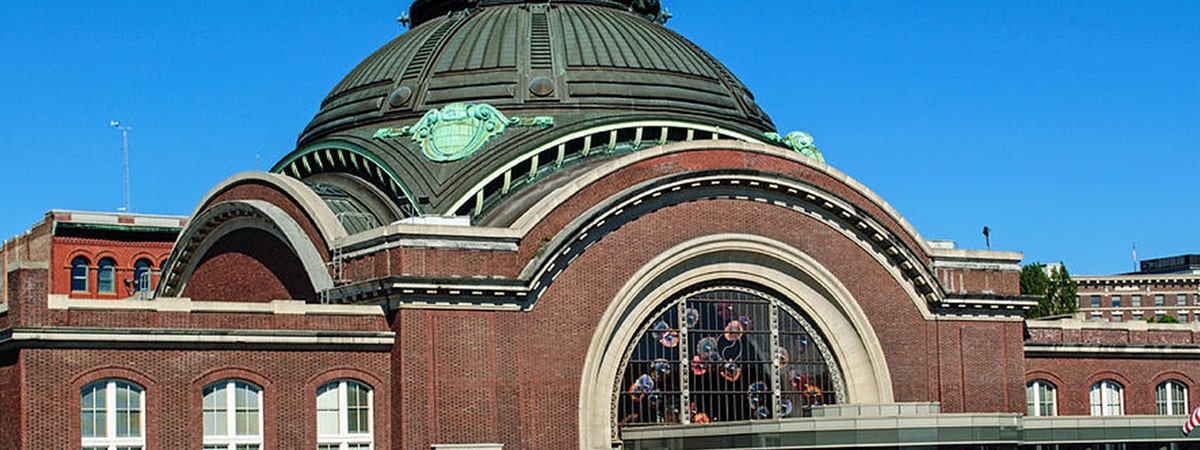
Perhaps Tacoma’s most breathtaking architectural treasure, Union Station opened in 1911 as a grand railroad terminal welcoming visitors from across the country. Today, the beautifully restored Beaux-Arts building serves as a federal courthouse and showcases a dazzling collection of Dale Chihuly glass art, paying tribute to Tacoma’s glassblowing heritage. https://www.visitpiercecounty.com/listing/union-station/198/
The Stadium High School Castle
Overlooking Commencement Bay, Stadium High School is one of Tacoma’s most photographed landmarks. Originally designed as a grand hotel before being repurposed after a fire, its castle-like architecture has been featured in films such as 10 Things I Hate About You. Its sweeping views and historic charm make it a beloved symbol of Tacoma’s resilience and creativity. https://stadium.tacomaschools.org/about/stadiums-history
Wright Park & the W.W. Seymour Botanical Conservatory
Established in the late 19th century, Wright Park is a 27-acre urban oasis filled with old-growth trees, walking paths, and public art. At its center is the stunning Seymour Conservatory, a Victorian-style glass greenhouse built in 1908. With its iconic dome and lush seasonal displays, it remains a beloved landmark and a reminder of Tacoma’s long-standing commitment to green space and botanical beauty. https://www.parkstacoma.gov/place/w-w-seymour-conservatory/
Fort Nisqually Living History Museum
Originally a Hudson’s Bay Company trading post from the 1830s, Fort Nisqually is now a meticulously reconstructed living history museum located in Point Defiance Park. Visitors can explore period buildings, meet costumed interpreters, and learn about early settler life in the Puget Sound region. https://www.parkstacoma.gov/place/fort-nisqually-living-history-museum/
Chihuly Bridge of Glass
Honoring Tacoma-born artist Dale Chihuly, the Bridge of Glass is a 500-foot pedestrian bridge that links downtown Tacoma to the Museum of Glass. Lined with dazzling glass sculptures overhead and along its sides, the bridge is both a functional walkway and a world-class art installation — a landmark that blends Tacoma’s industrial past with its artistic future. https://www.visitpiercecounty.com/listing/chihuly-bridge-of-glass/479/
Ruston Way & the Historic Waterfront
The waterfront along Ruston Way tells the story of Tacoma’s transformation. Once home to lumber mills, smelters, and heavy industry, the shoreline is now a scenic stretch of parks, piers, walkways, and public art. Landmarks such as the Fireman’s Park Totem Pole, old railroad remnants, and historic piers provide glimpses into the city’s past. https://www.visitpiercecounty.com/regions/tacoma/ruston-way-waterfront/
A City That Honors Its Roots While Moving Forward
Tacoma’s history isn’t just found in museums — it’s alive in the architecture, parks, neighborhoods, and waterfront. Each landmark reflects the city’s character: industrious, creative, resilient, and deeply connected to its natural surroundings. Whether exploring century-old buildings, walking through restored green spaces, or crossing a bridge lined with glass art, residents and visitors can experience a city that celebrates its history while embracing its future.